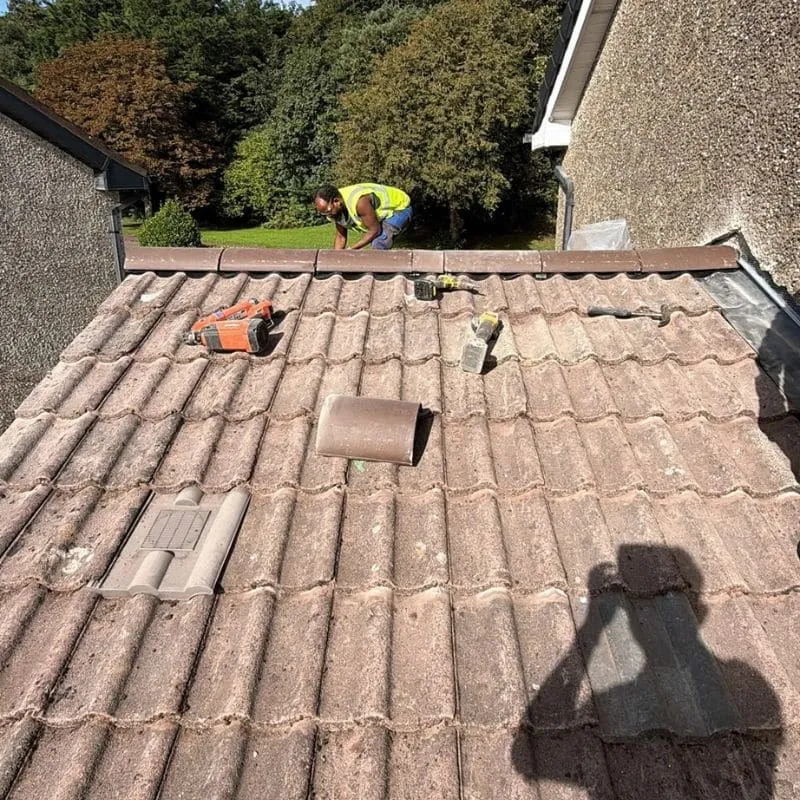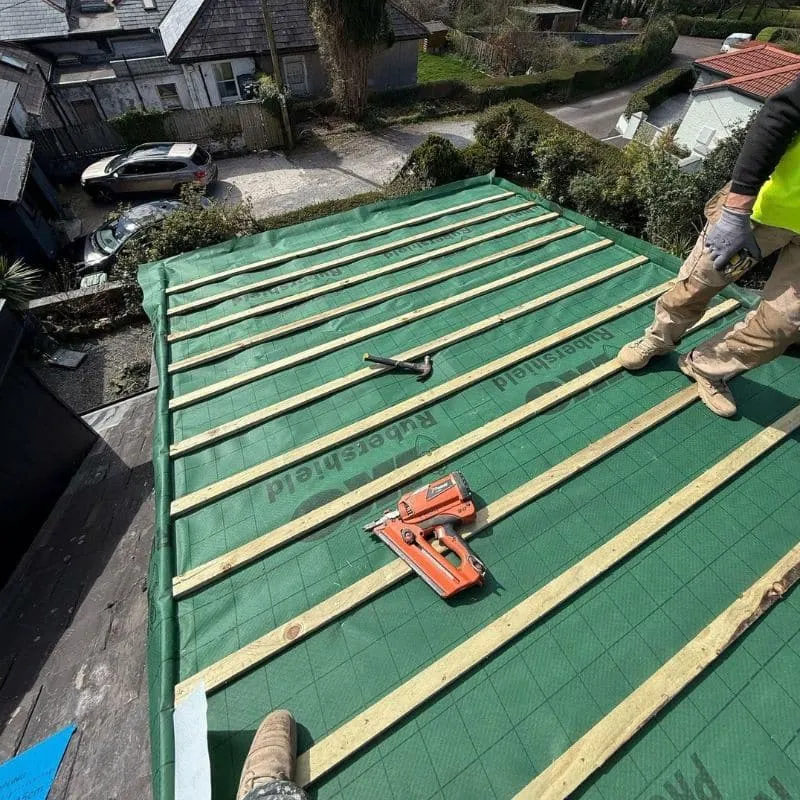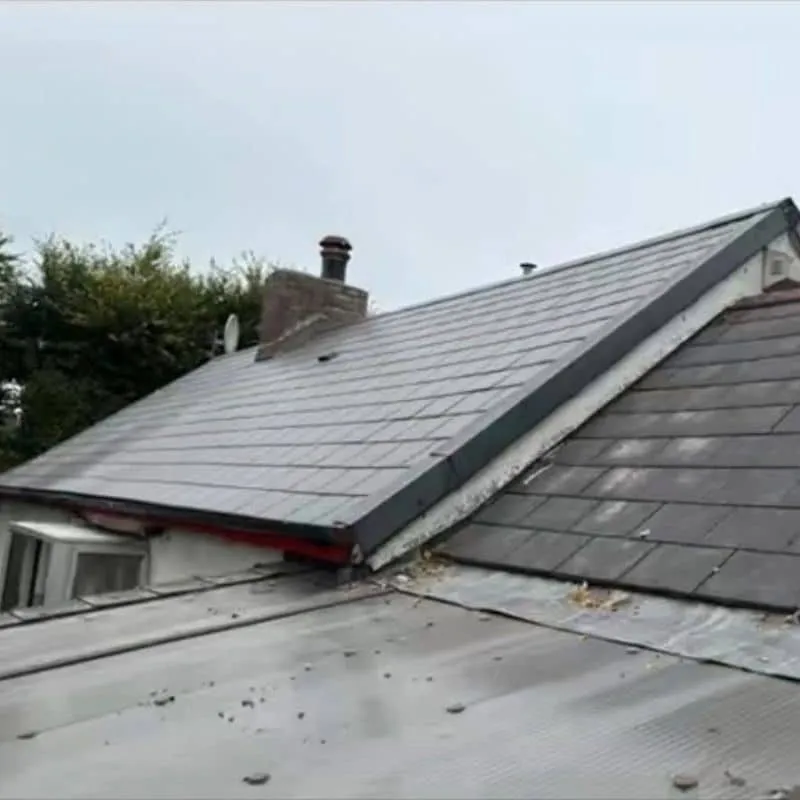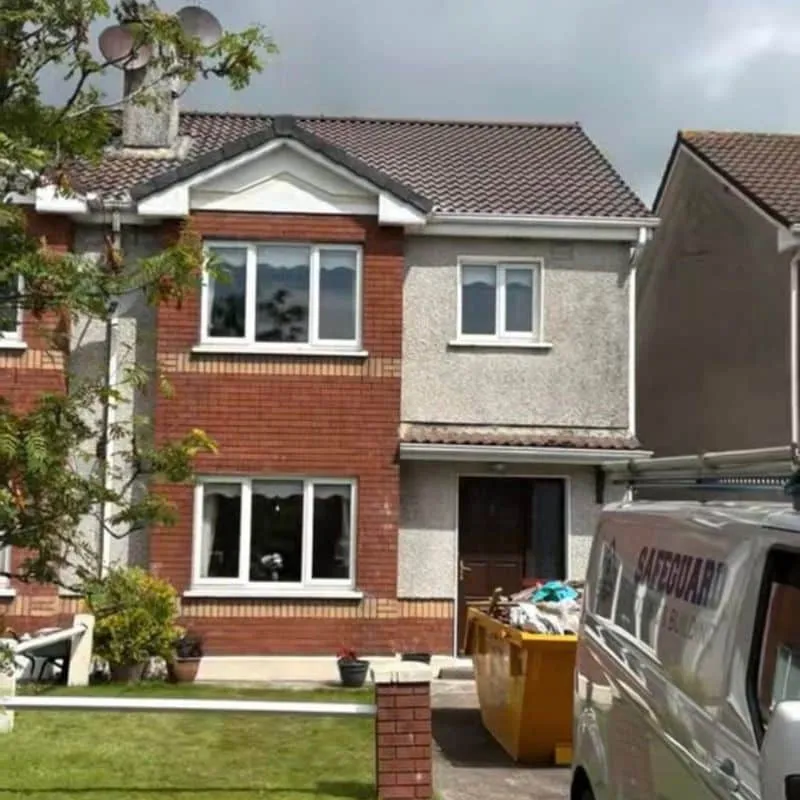
Dry verge and dry ridge systems provide a mechanically fixed alternative to traditional mortar at vulnerable roof edges and ridge tiles. If ageing mortar is cracking, loosening or repeatedly requiring repair, converting to a dry system can provide a cleaner and lower-maintenance long-term solution. The cost depends mainly on the amount of roofline involved, the property type and whether you are replacing the ridge, verge or both.
How Much Do Dry Verge & Dry Ridge Systems Cost in Cork?
A full dry ridge system typically costs €950–€1,350 for a bungalow or €1,250–€1,800 for a semi-detached or detached property. Dry verge typically costs €400–€650 for one side or €750–€1,100 for both sides. A combined dry ridge and full dry verge installation typically costs €1,500–€2,300. Published prices are plus VAT and exclude scaffolding.
These figures are intended as a pricing guide rather than a fixed quotation. Roof size, access, existing roof condition and the amount of ridge or verge requiring work can affect the final cost.
Dry Verge & Dry Ridge Prices in Cork
The pricing table above shows our typical pricing for complete dry ridge and dry verge installations.
| Work / property | What’s Included | Typical Price |
|---|---|---|
| Dry Ridge – Bungalow Full Roof | Remove the existing mortar ridge and install a full dry ridge system. | €950–€1,350 |
| Dry Ridge – Semi/Detached Full Roof | Remove the existing mortar ridge and install a full dry ridge system. | €1,250–€1,800 |
| Dry Verge – One Side | Full dry verge system to one side of the roof, including end caps. | €400–€650 |
| Dry Verge – Both Sides | Full dry verge system to both sides of the roof, including end caps. | €750–€1,100 |
| Dry Ridge + Full Dry Verge | Combined dry ridge and dry verge installation for a complete mortar-free roof finish. | €1,500–€2,300 |
For an exact price, we can assess your existing ridge and verge and provide a free quotation based on the property and work required.
What Is a Dry Ridge System?
A dry ridge system mechanically secures the ridge tiles running along the highest point of a pitched roof. Instead of relying primarily on a bed of mortar to hold the ridge tiles in place, a purpose-designed system uses mechanical fixings to secure them.
Traditional mortar can deteriorate after years of exposure to rain, frost, temperature changes and wind. Once it begins cracking or breaking away, ridge tiles can become loose and the roof may require repeated mortar repairs.
Installing a dry ridge system removes that dependence on exposed mortar and provides a mechanically fixed finish along the ridge.
How Much Does a Dry Ridge System Cost?
For a bungalow, our typical price for converting the full roof to a dry ridge system is €950–€1,350. Published prices are plus VAT and exclude scaffolding.
For a semi-detached or detached property, the typical price is €1,250–€1,800. Published prices are plus VAT and exclude scaffolding.
The work includes removing the existing mortar ridge and fitting a complete dry ridge system. The difference between property types reflects factors such as the length of ridge involved, roof layout, height and access.
What Is Dry Verge?
The verge is the exposed edge of a pitched roof at the gable end of the property. On many traditional roofs, tiles at this edge are finished and weathered using mortar.
A dry verge system replaces the exposed mortar finish with mechanically fixed verge units. These cover and protect the tile edges while providing a neat finished roofline.
As with dry ridge, the main attraction is that the system does not depend on exposed mortar remaining intact year after year.
How Much Does Dry Verge Cost?
A complete dry verge installation to one side of a roof typically costs €400–€650. Installing dry verge to both sides typically costs €750–€1,100. Published prices are plus VAT and exclude scaffolding.
Our typical specification includes the full dry verge system together with the appropriate end caps.
Whether one or both sides need work depends on the design of the property. A detached house may have exposed verges on both gable ends, while an attached property can have a different roof configuration.
Single Dry Verge Installation
A full dry verge system fitted along one applicable gable edge of the roof, including end caps.
Typical price: €400–€650
Full Dry Verge Installation
Dry verge installed to both applicable sides of the roof for a complete mechanically fixed verge finish.
Typical price: €750–€1,100
How Much Does Dry Ridge and Dry Verge Cost Together?
If both the ridge and verge are being upgraded at the same time, our typical combined price is €1,500–€2,300. Published prices are plus VAT and exclude scaffolding.
This provides a complete mortar-free finish to the relevant ridge and verge areas of the roof, rather than dealing with each element as a separate project.
For a roof where mortar is deteriorating in several areas, completing both systems together can also avoid carrying out separate roofing projects at different times.
Dry Ridge vs Mortar Ridge: What’s the Difference?
The fundamental difference is how the ridge tiles are secured.
A traditional ridge uses mortar around the ridge tiles. When correctly installed and maintained, mortar can perform well, but it remains exposed to the weather and can eventually crack, loosen or break away.
A dry ridge system uses mechanical fixings instead. This means the ridge tiles do not rely solely on exposed mortar for their long-term security.
Mortar Ridge
Ridge tiles are traditionally bedded and finished with mortar. Over time, weather exposure can cause the mortar to crack or deteriorate and repairs may eventually be required.
Traditional roof finish
Dry Ridge
A purpose-designed system mechanically secures the ridge tiles without depending on exposed mortar as the primary fixing method.
Mortar-free ridge finish
Dry Verge vs Mortar Verge: What’s the Difference?
Traditional verge mortar finishes the tile edges at a gable and helps protect the exposed roof edge. Like ridge mortar, it is continuously exposed to Cork’s weather and can deteriorate over time.
Dry verge uses individual mechanically fixed units along the tile edges instead. The system creates a consistent finish while removing the need for exposed mortar along the verge.
This can be particularly attractive where verge mortar has already required repeated patching or is visibly breaking away.
What Are the Benefits of Dry Ridge?
Reasons homeowners consider dry ridge include:
Mechanically fixed ridge tiles
No exposed ridge mortar to crack away
Neat and consistent finished appearance
Suitable when existing ridge mortar is deteriorating
Reduced dependence on future mortar repairs
Purpose-designed roofing components
Secure finish along the roof ridge
Can be installed alongside a dry verge system
What Are the Benefits of Dry Verge?
Dry verge performs a similar role at the gable edges of the roof. The individual verge units create a mechanically fixed finish around the exposed tile edges without relying on traditional mortar.
It also creates a uniform appearance along the roof edge, which can make a noticeable visual difference where old verge mortar has become cracked, uneven or repeatedly patched.
When Should Ridge Mortar Be Replaced?
Minor deterioration does not automatically mean the entire ridge needs converting to a dry system. Localised mortar repairs may still be appropriate where the remainder of the ridge is sound.
However, widespread cracking, loose sections of mortar or recurring repairs can indicate that the existing ridge finish is deteriorating more generally.
Signs the ridge may need attention include:
Visible cracks through ridge mortar
Pieces of mortar falling from the roof
Loose or displaced ridge tiles
Gaps appearing beneath ridge tiles
Previous mortar repairs failing again
Weathered or crumbling mortar
Movement following severe weather
Water ingress around the ridge area
If you’re unsure about the condition of the ridge, we can carry out a roof inspection in Cork to assess the roof before recommending the appropriate work.
When Should Verge Mortar Be Replaced?
Verge mortar commonly shows deterioration through cracking, separation from the tiles or sections breaking away from the gable edge.
A small isolated defect may be repairable. Where mortar is failing along a substantial section of the verge, converting to a dry verge system can provide an alternative to continually repairing the traditional finish.
The existing tiles and surrounding roof should also be checked because a new verge system still relies on the underlying roof being in suitable condition.
What Affects Dry Ridge and Dry Verge Installation Costs?
The figures above provide useful typical prices, but the exact cost depends on the individual roof.
Property Type
Bungalows, semi-detached and detached properties can have different ridge lengths and roof configurations, affecting the amount of material and labour required.
Length of Ridge & Verge
A larger or more complex roof naturally requires more dry ridge or verge components than a shorter, simpler roofline.
Existing Mortar
The condition of the existing ridge or verge and the amount of material that needs to be safely removed can affect the preparation required.
Roof Access
Height, pitch and surrounding access influence how the roofing team can safely reach and work along the ridge and gable edges.
Roof Condition
Damaged or displaced tiles and other defects discovered around the working area may need attention before the new system is completed.
Combined Installation
Upgrading the ridge and verge together changes the overall scope compared with installing either system individually.
Does Dry Ridge Help With Roof Ventilation?
Some dry ridge systems are designed to provide ventilation along the ridge while also weatherproofing and mechanically securing the ridge tiles.
Ventilation requirements depend on the construction of the roof, however, so a dry ridge should not simply be treated as a universal cure for condensation or ventilation problems.
If there are signs of condensation or moisture within the roof space, the wider ventilation arrangement should be considered rather than assuming the ridge alone is responsible.
Is Dry Ridge and Dry Verge Worth the Cost?
For a roof with sound tiles but deteriorating ridge or verge mortar, dry systems can provide a practical alternative to continuing with traditional mortar repairs.
The main benefit is not that mortar itself is inherently unsuitable. Rather, dry systems replace an exposed weather-dependent mortar finish with purpose-designed mechanical fixings.
Whether that represents good value depends on the existing roof condition, how extensive the mortar failure is and whether repairs have already been required repeatedly.
What Should a Dry Ridge or Dry Verge Quote Include?
When comparing quotations, it is worth establishing exactly what work is included rather than comparing the headline figure alone.
A quotation should make clear:
Whether existing mortar is being removed
The area of ridge or verge being upgraded
The dry system being installed
Whether end caps are included
Preparation of the existing roof edge
Any additional damaged tiles requiring attention
Access requirements for the property
Whether ridge and verge are being completed together
Getting an Accurate Dry Verge or Dry Ridge Quote in Cork
The best way to establish the cost is to assess the existing roof, because ridge length, verge configuration, property height and the condition of the existing mortar vary from one house to another.
We can inspect the roof and provide a free, no-obligation quotation for dry ridge, dry verge or a combined installation.
If only a small area is defective, the team can also assess whether targeted repair work is more appropriate than converting the entire roofline.
Dry Verge & Dry Ridge Installation Across Cork
We carry out roofing repairs and upgrades throughout Cork City and County, including dry ridge and dry verge work.
You can view the areas we cover across Cork or contact us to arrange a quotation for your property.
For the service and a genuine installation example: Dry ridge and dry verge installation