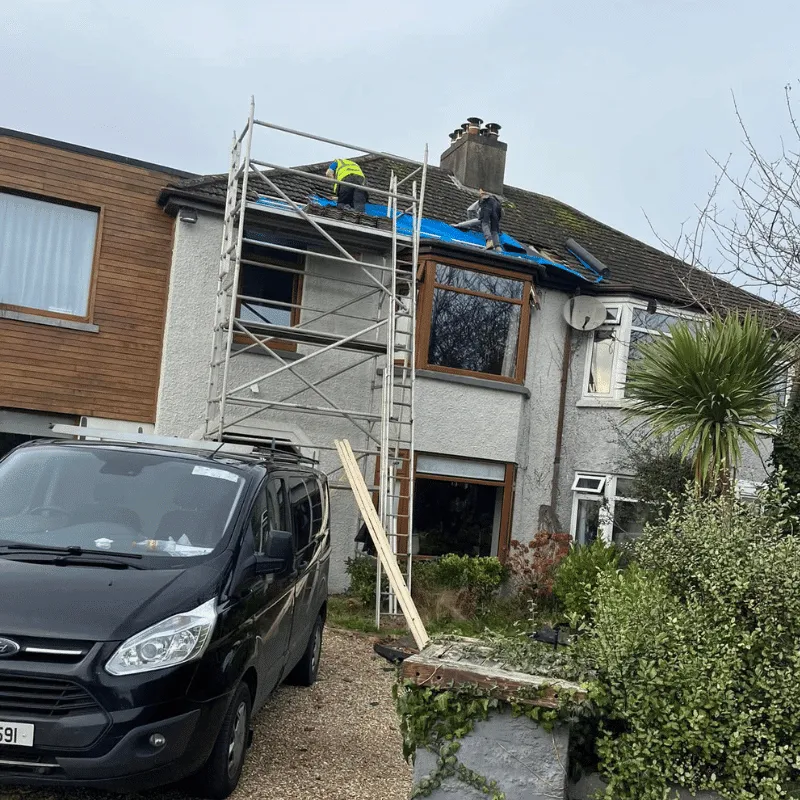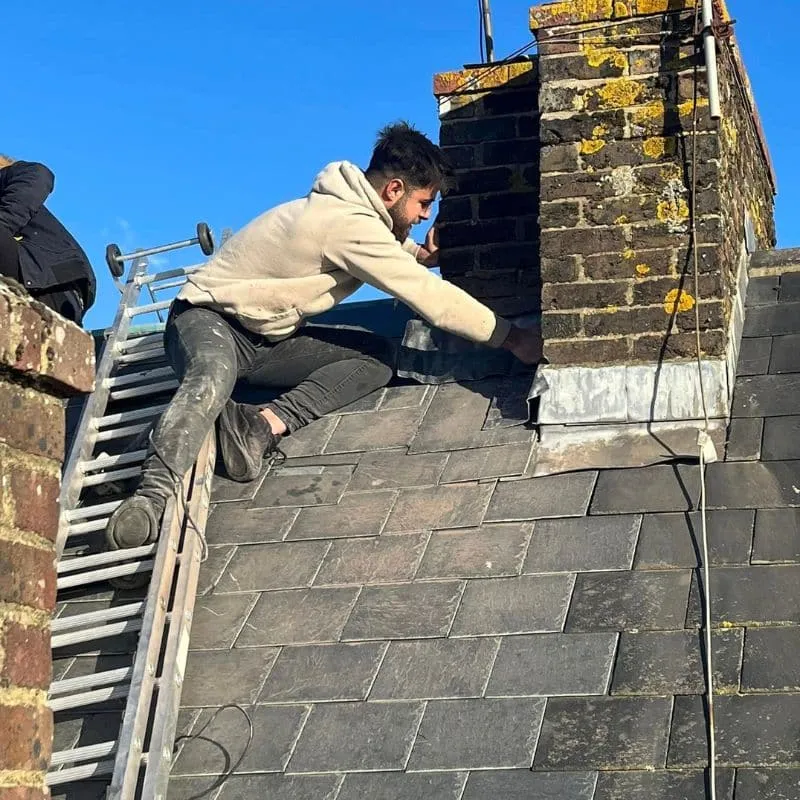
Roof repair costs in Cork vary considerably because a small number of slipped slates and a leak caused by widespread deterioration are very different jobs. As a general guide, minor repairs can cost from €150–€400, moderate roofing work often falls between €500–€2,000, while major repairs involving substantial sections of the roof can cost €3,000 or more.
How Much Does a Roof Repair Cost in Cork?
Minor roof repairs typically cost around €150–€400. More involved repairs affecting larger areas, valleys, flashing or multiple defects can typically cost €500–€2,000. Major roofing work involving structural deterioration or substantial sections of the roof can cost €3,000–€8,000+. Published prices are plus VAT and exclude scaffolding.
These figures are intended as a general pricing guide rather than a fixed quotation. The cause of the problem, roof type, access, materials and extent of damage all affect the final cost.
Typical Roof Repair Prices in Cork
The pricing table above gives a broad guide to roof repair costs. Because roofing problems can look similar from inside a property while having very different causes, an inspection is often required before the exact work and price can be confirmed.
| Work / property | Typical Work | Typical Price |
|---|---|---|
| Minor Roof Repairs | Small localised repairs such as replacing a limited number of slipped or damaged slates or tiles and minor flashing repairs. | €150–€400 |
| Moderate Roof Repairs | More involved repairs affecting larger areas, valleys, flashing, multiple leak points or other sections requiring additional labour and materials. | €500–€2,000 |
| Major Roof Repairs | Substantial work involving larger roof sections, deteriorated timber, extensive underlay or batten work, or significant storm damage. | €3,000–€8,000+ |
The broad ranges above are useful for budgeting, but the most important question is not simply how large the visible leak appears. It is what is causing it. We provide roof repairs in Cork and can assess the affected area before recommending the appropriate work.
How Much Do Minor Roof Repairs Cost?
Minor roof repairs typically fall within the €150–€400 range where the problem is localised and access is relatively straightforward. Published prices are plus VAT and exclude scaffolding.
This can include replacing a small number of slipped or damaged slates or tiles, addressing a minor flashing defect or carrying out another targeted repair where the surrounding roof remains in serviceable condition.
Catching a small defect early can prevent rainwater from continuing to enter the roof and affecting surrounding materials. However, a small damp mark indoors does not necessarily mean the roofing defect itself is small, so the source should still be properly identified.
How Much Do Moderate Roof Repairs Cost?
Moderate roof repairs generally fall within a broad range of €500–€2,000. Published prices are plus VAT and exclude scaffolding.
At this level, the work is normally more involved than replacing an isolated slate or sealing one small defect. The problem may affect a larger section of the roof, involve several potential leak points or require work around valleys, flashing or other roof junctions.
How Much Do Major Roof Repairs Cost?
Major roof repairs can cost approximately €3,000–€8,000+ where deterioration affects substantial areas of the roof. Published prices are plus VAT and exclude scaffolding.
This may include work to roofing timbers, underlay, battens or larger roof sections following prolonged water ingress, significant deterioration or storm damage.
Once repairs reach this scale, it is worth considering the condition of the roof as a whole. The sensible option may still be a substantial repair, but in some cases the cost and expected lifespan of the existing roof make replacement worth comparing.
What Types of Roof Repairs Are Common?
Slipped Slates & Tiles
Individual slates or tiles can become displaced or damaged, leaving the roof covering vulnerable to water ingress.
Flashing Repairs
Lead and other flashing protects vulnerable junctions where the roof meets chimneys, walls and other roof features.
Valley Repairs
Roof valleys carry significant amounts of rainwater where two roof slopes meet, making correct detailing particularly important.
Ridge Repairs
Loose ridge tiles or deteriorated ridge mortar may require localised repair or, where deterioration is widespread, a more comprehensive solution.
Underlay & Batten Repairs
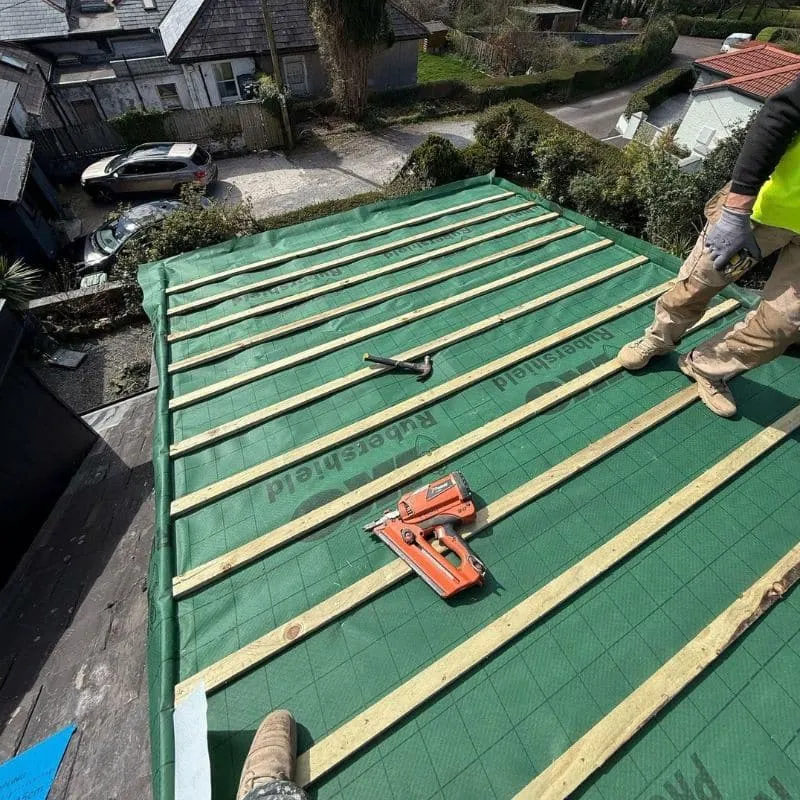
Deterioration beneath the visible roof covering can require slates or tiles to be removed so damaged underlying materials can be accessed.
Storm Damage
Strong winds and severe weather can displace roofing materials or expose weaknesses that were already developing.
How Much Does It Cost to Replace Slipped or Broken Slates?
A small slate or tile repair can fall within the €150–€400 minor repair range, depending on the number affected, their location and how the roof can be safely accessed. Published prices are plus VAT and exclude scaffolding.
The number of missing slates alone does not determine the cost. Replacing two easily accessible slates on a lower roof is very different from carrying out the same repair high on a difficult roof where additional access arrangements are necessary.
The surrounding slates or tiles should also be checked. If several have moved because fixings or underlying materials are deteriorating, replacing only the visibly missing pieces may not address the wider issue.
How Much Does a Roof Leak Repair Cost?
A straightforward localised leak may fall within the minor €150–€400 range, while more complicated leaks can move into the €500–€2,000 range or higher where larger areas need work. Published prices are plus VAT and exclude scaffolding.
The reason the range is so broad is simple: a leak is a symptom, not a diagnosis.
Rainwater might be entering through a damaged slate, failed flashing, a valley, chimney detail, roof edge or another part of the roofing system. Finding the actual entry point is therefore an important part of carrying out a lasting repair.
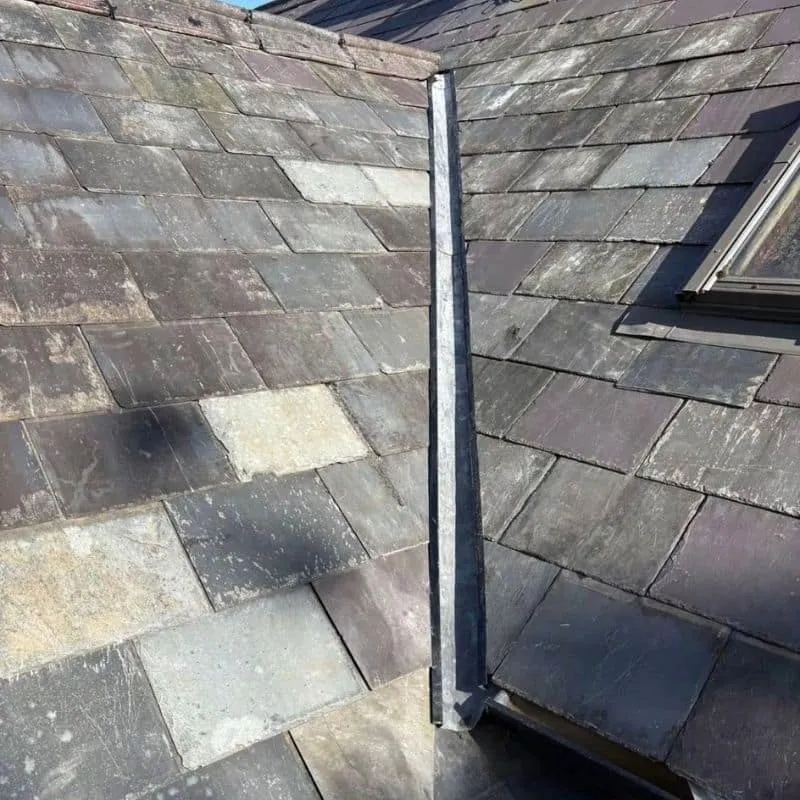
How Much Does a Roof Valley Repair Cost?
Valley repairs commonly fall within the moderate repair category, with more involved roof repair work typically costing €500–€2,000. The exact price depends on the valley construction, length, surrounding roof covering and extent of deterioration. Published prices are plus VAT and exclude scaffolding.
Valleys sit where two roof slopes meet and are designed to channel rainwater down the roof. Because a large amount of water can pass through this relatively narrow area, damaged or incorrectly detailed valleys can become significant leak points.
A proper repair may require roofing materials around the valley to be carefully removed before the defective section can be accessed and reinstated.
How Much Does Roof Flashing Repair Cost?
Small localised flashing repairs may fall within the minor repair range of €150–€400, while more extensive flashing work can cost more depending on the amount of material involved, location and access. Published prices are plus VAT and exclude scaffolding.
Flashing is used around vulnerable roof junctions, including where a roof meets a wall or chimney. If it becomes loose, damaged or incorrectly sealed, rainwater can find its way behind the roof covering.
Where the flashing problem is associated specifically with a chimney, the condition of the stack, mortar joints and surrounding roof should also be assessed. We’ll cover typical costs separately in our chimney repair pricing guide.
How Much Does a Flat Roof Repair Cost?
Flat roofs require different repair methods from pitched slate and tile roofs. The price depends on whether the problem is a localised defect or deterioration of the wider waterproofing system.
Our typical flat-roof patch repair costs €250–€400. Complete replacement costs considerably more depending on whether felt, fibreglass GRP or a warm roof system is selected. Published prices are plus VAT and exclude scaffolding.
For the complete breakdown, see our flat roof cost in Cork guide.
What Affects the Cost of a Roof Repair?
The amount of roofing material required matters, but several other factors can have just as much influence on the final quotation.
Extent of Damage
A single displaced slate is fundamentally different from deterioration affecting underlay, battens and several metres of roof covering.
Roof Access
Property height, roof pitch, extensions and surrounding access influence how the repair can be carried out safely.
Roof Material
Natural slate, roof tiles, flat roofing systems and specialist materials require different repair techniques and replacement components.
Location of the Defect
Repairs around valleys, chimneys, junctions and other detailed areas can require more work than an isolated defect in an open roof slope.
Hidden Damage
Long-term water ingress can affect battens, decking or roofing timbers beneath a surface that initially appears to need only a small repair.
Urgency
Emergency work required to make a property temporarily watertight can differ in scope and cost from planned roofing repairs carried out under normal conditions.
Why Does Roof Access Affect the Price?
Roofing work has to be carried out safely. A repair that can be reached relatively easily may require far less setup than the same defect on a high, steep or difficult-to-access section of roof.
Extensions, conservatories, narrow side passages and neighbouring buildings can all complicate access even where the main property itself is not particularly tall.
Published repair prices exclude scaffolding. Where specialist access equipment or scaffolding is required, agree its cost and inclusion in the individual quotation.
Does Roof Material Affect Repair Cost?
Yes. Different roof coverings have different materials, fixing methods and repair requirements.
Natural slate, for example, is repaired differently from concrete or clay tiles. A flat roofing membrane requires an entirely different approach again.
Replacement materials also need to be suitable for the existing roof. On older properties, matching the size and appearance of existing roofing materials can sometimes require additional consideration.
When Is a Roof Repair No Longer Worth It?
There is no reliable percentage or age rule that can decide this for every property. A relatively old roof can still be worth repairing if the overall covering and structure remain sound, while a younger roof can have significant problems if it was poorly installed or has suffered serious damage.
Instead, the decision should consider the extent of deterioration, how frequently repairs are becoming necessary, the cost of the proposed work and the condition of the rest of the roof.
Roof Repair
Usually makes sense where the problem can be isolated and the surrounding roof covering, structure and associated components remain in suitable condition.
Minor repairs typically €150–€400
Roof Replacement
Worth considering where problems are widespread, major components are deteriorating or repeated repairs are no longer providing good long-term value.
Assess the complete roof before deciding
What Are the Signs a Roof Needs Repair?
Some roofing defects are obvious from ground level or inside the property, while others only become apparent during an inspection.
Signs worth investigating include:
Damp patches appearing on ceilings
Water entering during heavy rain
Missing or visibly displaced slates
Cracked or broken roof tiles
Loose ridge tiles or failing ridge mortar
Damage around roof valleys
Loose or deteriorated flashing
Recurring leaks after previous repairs
What Should You Do if Your Roof Starts Leaking?
If water is actively entering the property, protect the internal area where it is safe to do so and arrange for the roof to be assessed. Avoid climbing onto a wet or storm-damaged roof yourself.
Photographs of the internal damage and any roofing material found at ground level can be useful, but they should not replace an external assessment of the actual defect.
For urgent problems, we also provide emergency roofing services in Cork .
What Should a Roof Repair Quote Include?
A roof repair quotation should make the proposed scope of work clear enough that you understand what is actually being repaired.
Depending on the repair, look for details such as:
The area or defect being repaired
Materials being removed or replaced
Replacement slates or tiles where required
Flashing or valley work included
Any underlay or batten work required
Access requirements
Additional defects identified during inspection
The overall scope of the completed repair
How Can You Reduce the Risk of Expensive Roof Repairs?
No roof is completely maintenance-free, but dealing with visible defects before water has been entering for a prolonged period can reduce the chance of a relatively localised problem affecting surrounding materials.
It is worth paying attention to missing or displaced roofing materials after severe weather, changes around flashing and ridge areas, and any new signs of dampness internally.
Gutters should also be kept clear so rainwater can drain away from the roof edge properly. You can see typical maintenance costs in our gutter repair and replacement cost guide.
Roof Repairs Across Cork
We carry out roof repairs throughout Cork City and County, including Douglas, Ballincollig, Carrigaline, Midleton, Cobh, Mallow, Bandon, Macroom and surrounding areas.
From individual damaged slates and leaking roof details to more extensive repair work, the aim is to identify the actual cause of the problem and recommend work appropriate to the condition of the roof.
You can view all areas we cover across Cork or learn more about our roof repair services in Cork.
Explore the work behind a repair quotation: Roof valley repairs · Slate roof repairs